
In exterior Slim door systems, attention is often focused on the bottom rollers as the primary load-bearing components. However, to ensure stable, effortless, and wobble-free operation, the upper guide roller is the critical element controlling movement. While this component does not bear heavy loads, it determines whether the door sash travels straight or oscillates during sliding. For large-format exterior Slim systems, the role of the guide roller becomes even more pronounced. Kerssenberg’s upper guide rollers are developed to address this precise challenge. Eschewing superficial appearance, the hardware focuses entirely on the function of maintaining direction, stabilizing movement, and preserving a consistent operational feel over time.
The True Role of the Upper Guide Roller
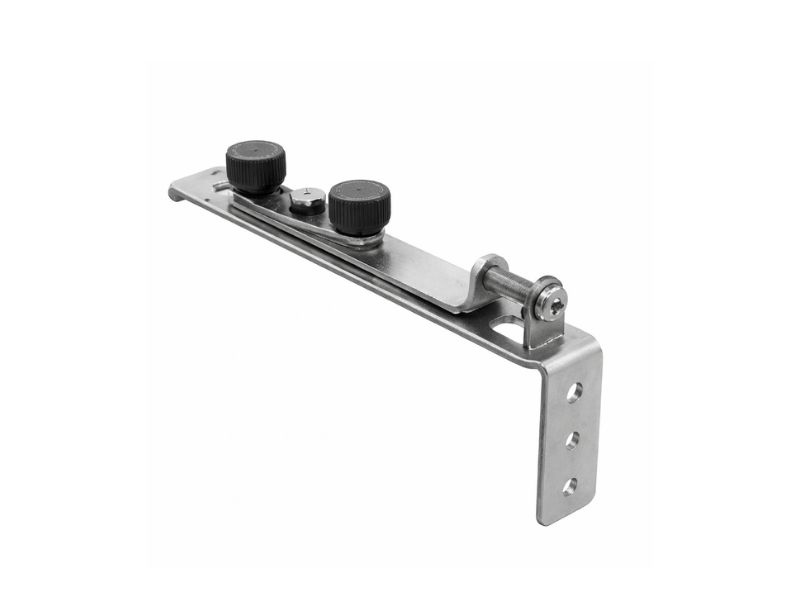
The upper guide roller does not bear the primary load of the door sash. Its function is to maintain the sash on the correct trajectory during sliding. As the door moves, lateral forces from user operation, wind pressure, or environmental vibration affect the entire system. Without an effective guidance mechanism, the sash is prone to lateral shaking or deviation. This creates a sensation of instability and can even generate noise during operation. The guide roller controls this movement by keeping the sash closely aligned with its designed position. In exterior Slim systems, characterized by slender profiles and large apertures, this requirement is paramount. Kerssenberg positions the upper guide roller as a geometric motion control component, ensuring the sash slides straight from start to finish.
The Relationship Between Guide Rollers and Load-Bearing Rollers
In a Slim door system, the bottom and upper rollers always work in tandem. The bottom rollers support the entire weight of the sash, while the upper guide rollers ensure movement stability. When these two components coordinate effectively, the door feels both light and solid. If the guide roller is missing or lacks precision, lateral force shifts to the bottom rollers. This increases friction, making the door feel heavy and accelerating degradation. Kerssenberg’s upper guide rollers help reduce stress on the bottom rollers by preventing sash twisting. Consequently, the entire system operates more durably over time. This is a critical technical relationship often overlooked when focusing solely on load capacity.
Guidance Mechanism and Wobble Control
Vibration or “wobble” in exterior Slim doors often stems from uncontrolled lateral movement. Even a slight deviation during sliding can create a feeling of looseness. The upper guide roller acts as a control fulcrum, keeping the sash aligned with the designed track and limiting side-to-side oscillation. This mechanism prevents the sash from shaking under wind pressure or forceful user operation. With Kerssenberg’s guide rollers, the design emphasis lies on motion stability rather than load bearing. This is the correct approach for Slim exterior systems, where the slenderness of the sash requires precise control rather than brute force.
Machining Precision and Its Effect on Operation
The machining precision of the guide roller directly impacts the sliding sensation. If the roller has deviations, the sash will not engage evenly with the guide rail, causing slight vibration or noise. Kerssenberg’s upper guide rollers are machined with high precision to ensure stable contact. When the rollers rotate uniformly, sash movement becomes smooth and seamless. Users can perceive the difference from the very first interaction. This sensation comes not from propulsion force but from well-controlled motion—a crucial factor for projects demanding a premium user experience.
Role in Large-Format Exterior Slim Systems
Large-format exterior Slim doors are often subject to strong environmental forces. Wind pressure, temperature fluctuations, and high usage frequency all affect movement. In this context, the upper guide roller plays the role of maintaining geometric stability for the sash. It prevents the sash from shaking under lateral impact. For systems with large spans, even minor deviations are noticeable. Kerssenberg’s guide rollers are developed to meet this requirement, helping the sash maintain a solid feel despite large dimensions. This factor enables exterior Slim systems to maintain operational quality over the long term.
Long-Term Stability in Real-World Conditions
Guide accessories must not only perform well initially but also maintain efficiency after long-term use. If guide rollers wear out or deform, the sash will begin to wobble. Kerssenberg’s upper guide rollers are designed to operate stably in exterior conditions. The structure and materials are selected to minimize wear during operation, ensuring sash movement remains stable after numerous opening and closing cycles. This reduces the need for future alignment and maintenance of the Slim system.
Synchronization with the Slim Track and Frame
Guide rollers only achieve maximum efficiency when working in synchronization with the track and frame. The design of Kerssenberg guide rollers aims for full compatibility with exterior Slim systems. When the rollers and track mesh perfectly, movement is better controlled, reducing unnecessary friction and limiting vibration. This synchronization does not drastically change the visual appearance but significantly impacts operation. This is why high-end door systems prioritize synchronized accessories over random assembly.
User Experience Perspective
From the user’s perspective, the upper guide roller is not a visibly prominent detail. However, the perception of the door’s solidity depends heavily on it. When the door slides straight without shaking, users feel a sense of stability and reliability in daily use. Kerssenberg’s guide rollers contribute directly to this experience, enabling the door to operate lightly without feeling loose. This is the necessary balance for high-end exterior Slim systems.
Technical Value in the Slim Panorama Kögen System
In the Slim Panorama Kögen system, the upper guide roller is part of the overall operational solution. It does not function independently but coordinates with the bottom rollers and sliding track. Its role is to stabilize motion, ensuring the sash always follows the correct path. This allows the Slim system to achieve both slim aesthetics and a solid operational feel. Selecting the appropriate guide roller helps the door system maintain quality over time. Kerssenberg positions this hardware as an essential technical detail for demanding exterior Slim systems.
Conclusion
Kerssenberg’s Upper Guide Rollers ensure stable operation for exterior Slim doors by keeping the sash sliding straight and minimizing wobble. While not a primary load-bearing component, it plays a vital role in motion control. With high machining precision and the ability to perform stably in outdoor environments, these guide rollers contribute to sustaining a durable user experience. In large-format exterior Slim systems, this small technical detail has a significant impact on overall operational quality.