
Vietbuild 2026 was not just a place to showcase products. It was where real solutions were tested through real interaction. Visitors did not come only to look. They came to touch, operate, and evaluate.
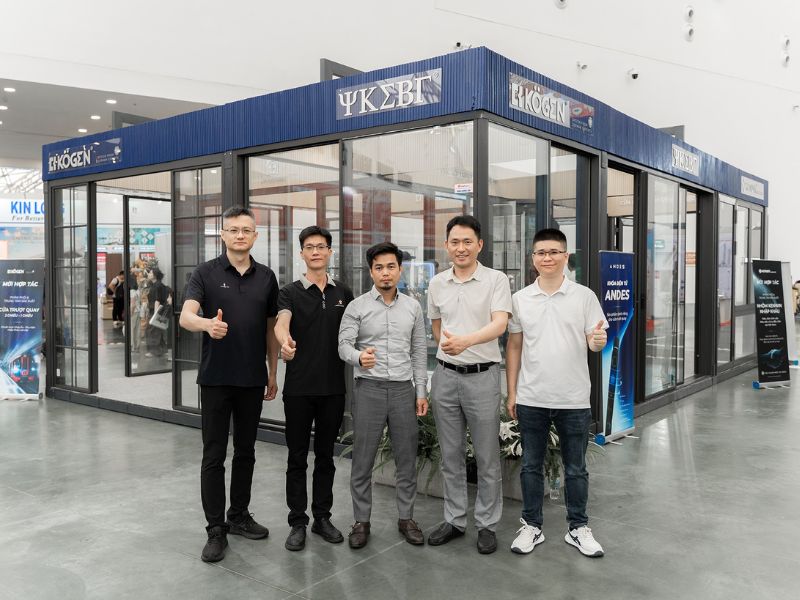
At this year’s exhibition, YKEBR joined with a clear role. We are the exclusive distributor of Kerssenberg hardware in Vietnam. Instead of presenting parts separately, we focused on how each component works in a complete system. Every display was built around actual doors, not isolated samples.
This approach changed the way people experienced hardware. They did not need to imagine performance. They could feel it directly through movement, resistance, and stability. Each interaction told a story about how a door performs over time.
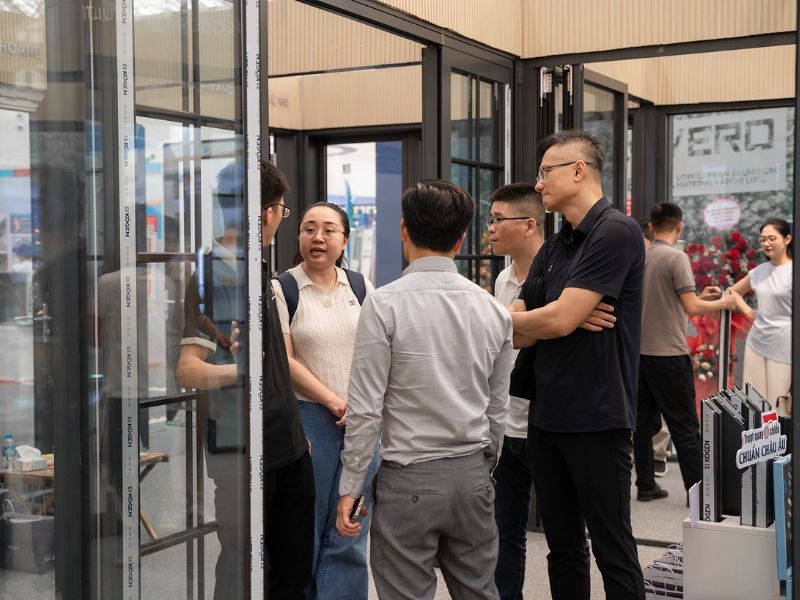
More importantly, the exhibition became a meeting point. Designers, contractors, and homeowners shared the same space. Technical standards met real usage expectations. Questions were not theoretical. They were based on daily use, installation challenges, and long term durability.
For YKEBR, the goal was simple. We wanted to show that hardware is not a secondary detail. It defines how a door behaves every day. When movement feels smooth, it comes from engineering. When a door stays stable, it comes from structure. And when performance remains consistent, it comes from the right components working together.
Where Technical Standards Meet Real Operation
Vietbuild has always been a large scale event. However, what makes it valuable is not its size. It is the way products are evaluated in real conditions. Visitors do not rely on brochures. They rely on direct experience.
At the YKEBR booth, this idea was very clear. We did not separate design from function. Every system was presented as a working unit. Doors were installed and ready for operation. People could open, close, slide, and test them freely.
This created a different type of conversation. Instead of asking about specifications, visitors asked about behavior. They wanted to know how stable the door feels. They asked about long term alignment. They also focused on noise, vibration, and control.
These questions reflect a shift in the market. Users are no longer satisfied with appearance alone. They care about how a product performs after months or years. This is where hardware becomes critical.
The role of Kerssenberg in this context is very specific. It supports the system behind the visible frame. It ensures that movement remains consistent. It reduces unwanted vibration. It also helps maintain alignment under repeated use.
YKEBR did not position itself as a simple supplier. We focused on solutions that can be verified immediately. Each door at the booth acted as a real demonstration. Instead of explaining performance, we let users experience it.
This approach helped bridge the gap between technical design and actual usage. It also allowed partners to evaluate solutions more confidently. When performance is visible, decisions become clearer.
Hardware as the Core of Door Experience
Many people still see hardware as a supporting element. It is often hidden and rarely discussed in detail. However, real performance depends heavily on these components.
A door system is not defined only by its profile. It is defined by how it moves. Movement involves friction, load distribution, and control. All of these depend on hardware.
Kerssenberg focuses on this aspect. The goal is not only to make parts that fit. The goal is to ensure stable operation under real conditions. This includes frequent use, varying loads, and environmental factors.
At the exhibition, this philosophy was made visible. Visitors could feel how each door responds during operation. Smooth movement was not accidental. It came from precise coordination between components.
Stability was another key point. When a door remains aligned after repeated use, it shows the importance of internal structure. Hardware plays a major role in maintaining this condition.
Durability is also linked to design. Components must handle weight and movement over time. They must resist wear and maintain performance. This is not achieved by a single part. It requires a complete system working together.
YKEBR highlighted this idea through real setups. Each system demonstrated how hardware contributes to daily use. Visitors could compare different mechanisms. They could feel the difference in control and stability.
This helped change perception. Hardware was no longer seen as a small detail. It became a central element of the overall experience. When a door performs well, it is often because of what is hidden inside.
Real Experience Through Complete Door Systems
One of the most important decisions at the booth was how to present hardware. Instead of displaying components separately, we integrated them into complete door systems.
This created a more meaningful experience. Visitors did not need to imagine how parts work together. They could see and feel it directly. Each movement showed the role of every component.
For example, when sliding a large panel, users could feel the load distribution. The movement remained controlled and stable. This was not just about the track. It was about how wheels, guides, and adjustable elements work together.
When operating folding systems, coordination became more visible. Multiple panels moved in sequence. Alignment was maintained throughout the process. This showed the importance of synchronization between parts.
The use of Kerssenberg hardware in these systems helped demonstrate consistency. Movement remained smooth even after repeated use during the exhibition. This was important because it reflected real conditions.
Visitors also paid attention to small details. They noticed how handles felt during operation. They observed how locking mechanisms responded. These details contribute to the overall perception of quality.
Another key aspect was adjustability. Some systems included components that allow fine tuning. This helps maintain performance after installation. It also supports long term stability.
YKEBR used these setups to explain practical value. Instead of focusing on specifications, we focused on experience. Each system told a complete story. From movement to control, everything could be evaluated on the spot.
This approach made the booth more interactive. It also made discussions more practical. Visitors could connect technical details with real usage. This is where understanding becomes deeper.
Folding Door System with Visible Hinges: Coordinated Movement in Large Openings
The folding door system with visible hinges attracted strong attention at the booth. It is often used in large openings where flexibility is required. However, performance depends on how well each component works together.
This system includes several key elements. Hinges connect the panels and control their alignment. Guide rollers help maintain direction during movement. Load bearing rollers support the weight both at the top and bottom. Handles provide control, while the two way transmission lock ensures secure operation. Automatic locking points add another layer of safety.
What visitors noticed first was the sequence of movement. Panels fold in a controlled manner without sudden shifts. This shows how load is distributed across the system. Each component shares a part of the work.
The role of Kerssenberg hardware becomes clear during this process. Movement remains stable even when multiple panels are in motion. There is no visible imbalance between sections. This is important for long term use.
Another key observation was alignment. When closing the system, panels return to position smoothly. There is no forced adjustment. This indicates that hinges and rollers are working in sync.
Users also tested repeated operation. The system maintained consistency even after many cycles. This reflects how components are designed to handle real conditions.
The locking mechanism also received attention. It operates in a predictable way. Users can feel when the door is fully secured. This adds confidence during daily use.
Overall, the system demonstrated that performance comes from coordination. No single part defines the result. It is the combination that creates stability and control.
Slim Folding Door System: Minimal Form with Structural Control
The slim folding system presents a different challenge. It focuses on a clean and minimal appearance. At the same time, it must maintain strength and stability.
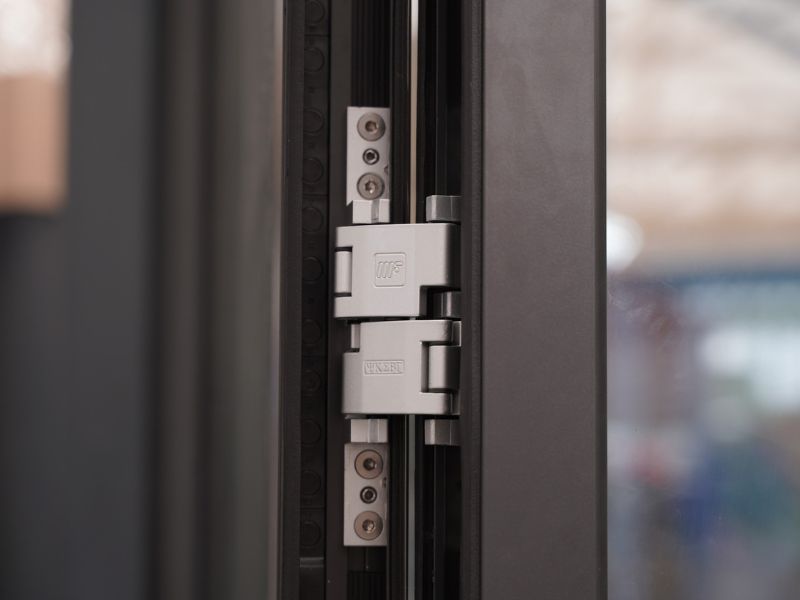
This system uses a more refined set of components. The connection joint plays a key role in linking panels. Handles are designed to match the slim profile. Panel hinges must be compact but still strong. Load bearing rollers are placed both above and below. Automatic locking points are integrated into the structure. Adjustable motion elements allow fine tuning after installation.
Visitors often questioned whether a slim system can remain stable. This concern is valid. Reduced frame size means less margin for error. Every component must perform precisely.
When operating the system, users could feel the difference. Movement remained controlled without excessive vibration. Panels stayed aligned throughout the folding process. This shows how internal structure compensates for minimal design.
The adjustable elements are especially important. They allow installers to fine tune the system. Over time, this helps maintain performance. It also reduces the risk of misalignment.
Kerssenberg components support this balance between design and function. They ensure that slim does not mean weak. Instead, the system remains stable under daily use.
Another point of interest was the closing action. Panels return to position with a consistent feel. There is no sudden movement or resistance. This creates a more refined experience.
This system demonstrates that minimal design requires strong engineering. Visual simplicity depends on internal complexity. When both are balanced, the result is both elegant and reliable.
Slim Panorama Sliding System: Stability in Large Scale Movement
The slim panorama sliding system represents a different type of challenge. It deals with large panels and significant weight. At the same time, it aims to maintain a light visual appearance.
Several components are critical in this system. Bottom rollers carry the main load. Top guide rollers maintain direction and prevent sway. Adjustable motion bars allow fine tuning. Handles provide control during operation.
When visitors interacted with this system, they focused on movement. Large panels can easily become unstable if not properly supported. However, the system remained controlled during sliding.
The role of Kerssenberg hardware is very visible here. Load distribution is handled efficiently. Movement feels balanced from start to end. There is no sudden acceleration or loss of control.
Another important aspect is vibration. Large panels tend to create more movement during operation. However, the system showed minimal vibration. This indicates strong coordination between rollers and guides.
Users also tested stopping and starting motion. The response remained predictable. This is important for safety and comfort. A system that reacts smoothly is easier to use daily.
Adjustability also plays a role. Installers can fine tune alignment after installation. This helps maintain long term stability. It also ensures that performance does not degrade over time.
Handles were another detail that users noticed. They provide a firm grip without interrupting the slim design. This shows how small elements contribute to overall usability.
This system highlights a key principle. Large scale movement requires strong internal support. Visual lightness must be backed by structural strength.
Direct Presence of Kerssenberg Representatives: Bridging Manufacturer and Market
One of the most meaningful moments at the exhibition was the presence of Kerssenberg representatives. They traveled to Vietnam and visited the booth in person. This created a direct connection between the manufacturer and the local market.
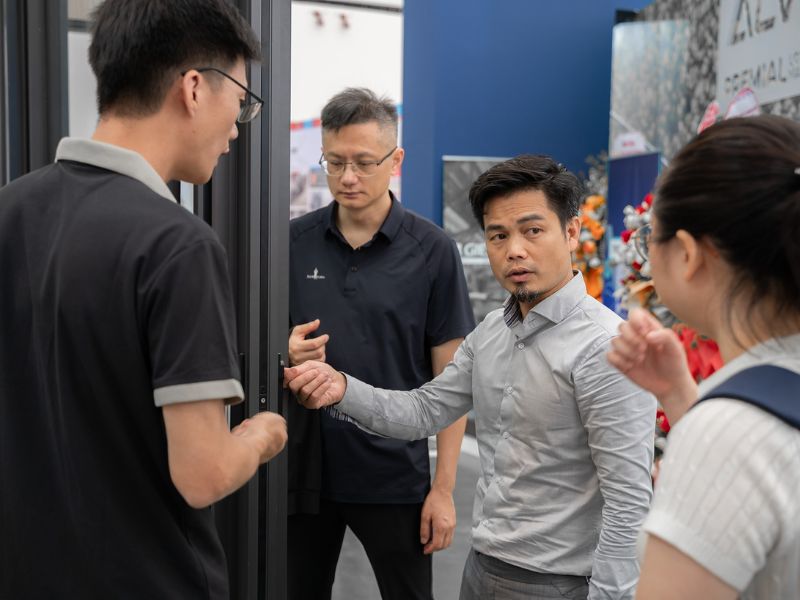
During the event, they engaged with partners and customers. Conversations were focused on real applications. Topics included installation challenges, performance expectations, and long term reliability.
This interaction brought practical value. Instead of relying on second hand information, visitors could receive direct insights. Technical standards were explained clearly. Product direction was also shared openly.
For YKEBR, this presence reinforced a strong partnership. It showed that collaboration goes beyond distribution. It involves continuous exchange of knowledge and feedback.
Visitors also appreciated the opportunity to ask detailed questions. They could discuss specific use cases. They could also understand how solutions are developed at the source.
The presence of Kerssenberg at the exhibition was not symbolic. It reflected commitment. It showed that the brand is actively involved in supporting the market.
This also helped build trust. When users see direct engagement, they feel more confident in the solution. It reduces uncertainty and improves decision making.
The exhibition became more than a showcase. It became a platform for connection. Technical knowledge, market needs, and real experience came together in one place.
YKEBR’s Role in the Modern Door Ecosystem
After several days at Vietbuild 2026, one thing became clear. The perception of hardware is changing. It is no longer treated as a hidden detail. It is now recognized as a core part of the system.
YKEBR positions itself within this shift. We do not focus on supplying individual components. We focus on delivering complete operational solutions. This means understanding how each part contributes to the whole.
The collaboration with Kerssenberg plays a key role in this approach. It allows us to bring consistent technical standards into real projects. More importantly, it helps ensure that performance is not only promised but delivered.
In modern architecture, expectations are higher. Doors are larger, slimmer, and used more frequently. This creates new demands on movement, stability, and durability. These demands cannot be met by design alone.
Hardware becomes the element that connects design with function. It ensures that what looks good also works well. It supports the system under real conditions, not just ideal scenarios.
YKEBR works closely with partners across different stages. From design to installation, we aim to maintain consistency. This helps reduce issues during use. It also improves long term reliability.
Another important aspect is adaptability. Every project has its own requirements. Conditions vary depending on location, usage, and scale. Solutions must be flexible enough to respond to these differences.
By working with Kerssenberg, YKEBR is able to support this flexibility. The focus is not on a single product. It is on how systems can be adjusted and optimized for each case.
This approach defines our role. We are not just part of the supply chain. We are part of the performance behind each door system.
From Exhibition to Real Projects
Vietbuild 2026 has come to an end. However, the value created during the event continues beyond the exhibition space. What was presented is already moving into real applications.
Visitors did not only observe systems. They experienced how those systems behave. This experience influences how decisions are made in actual projects.
The solutions introduced at the booth are not concepts. They are ready to be implemented. Each system has been tested through real interaction. This reduces uncertainty when applied in construction.
The role of Kerssenberg in this transition is essential. It supports the movement from demonstration to daily use. It ensures that performance remains consistent outside the exhibition environment.
YKEBR continues to work with partners after the event. Discussions that started at the booth now move into project planning. Technical questions become part of real design decisions.
This continuity is important. It shows that the exhibition is not an isolated moment. It is part of a longer process that leads to actual implementation.
In real projects, conditions are more demanding. Usage is continuous. Expectations are higher. Systems must perform reliably over time.
This is where the value of proper hardware becomes evident. It supports the system when challenges appear. It helps maintain stability even under repeated use.
The experience at Vietbuild becomes a reference point. It allows users to recall how a system felt in operation. This helps guide their choices in real situations.
Closing: What Defines a Door Is What You Do Not See
A door is often judged by its appearance. Frame design, glass size, and overall style are easy to notice. However, these are only part of the story.
What truly defines a door is how it behaves. It is the way it moves. It is the way it responds after repeated use. It is the way it maintains stability over time.
These qualities are not always visible. They are built into the system through its internal components. This is where Kerssenberg plays its role.
YKEBR focuses on bringing this hidden value to light. Not by explaining it in theory, but by demonstrating it in practice. When users experience the difference, understanding becomes natural.
Vietbuild 2026 provided the stage for this approach. It allowed solutions to be tested through real interaction. It also created a space where expectations and performance could meet.
As projects move forward, this understanding becomes more important. Choosing the right system is not only about design. It is about long term performance.
Hardware may not be the first thing people see. But it is the element that defines the entire experience.
And in the end, what remains is not how a door looks on the first day. It is how it performs every day after that.