
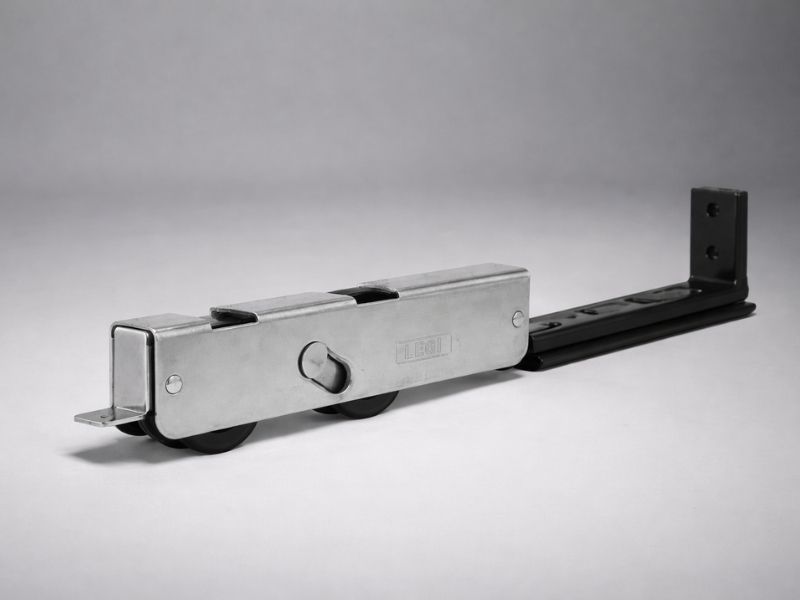
In exterior Slim door systems, load-bearing capacity is not defined by surface appearance or visible design. The deciding factor lies in the bottom roller set, which supports the entire weight of the sash throughout its usage. When the load is well-controlled, the door operates lightly, evenly, and stably over time. The Kerssenberg 2-wheel bottom roller set was developed to address this precise load-bearing challenge, reflecting Kerssenberg’s technical approach to exterior Slim systems. The hardware focuses on even load distribution, reducing localized pressure, and maintaining stable motion under outdoor conditions.
The Role of Bottom Rollers in Exterior Slim Systems
In the structure of exterior Slim doors, the bottom roller is the primary load-bearing component. The weight of the glass, aluminum frame, and environmental impacts all converge at this position. As the door is opened and closed daily, the rollers must withstand continuous repetitive force. If the load is not distributed reasonably, heavy operation and sash sagging will occur. This directly affects the user experience and the durability of the entire system. The 2-wheel bottom set is designed to share the load rather than concentrating force on a single point. With this approach, the door system maintains long-term stability. Kerssenberg views the bottom roller as an operational foundation rather than merely a supplementary hardware.
2-Wheel Structure and Load Distribution Logic
The 2-wheel bottom set utilizes two parallel rollers. Each roller accepts a portion of the sash’s load. When the door moves, force is distributed evenly across both wheels. This load-sharing method reduces localized pressure on the sliding track. Consequently, movement becomes smoother and more consistent. If only a single load-bearing point were used, the track would wear quickly, and the door would be prone to misalignment. The 2-wheel set helps mitigate this issue. Kerssenberg’s design aims for a balance between load-bearing capacity and operational stability, aligning with the hardware philosophy Kerssenberg pursues. This is the appropriate technical logic for medium to large-sized exterior Slim systems.
Load Capacity and Maintaining Sash Geometry
When a door sash bears a heavy load, operational geometry is prone to alteration. The sash can sag slightly or derail if the force is uncontrolled. The 2-wheel bottom set helps maintain the sash in a stable state by distributing force evenly. As a result, the sash maintains its designed position throughout the sliding journey. This prevents the door from sagging after long periods of use. For projects requiring high durability, the ability to maintain geometry is a critical factor. Kerssenberg developed this roller set to meet the requirement for stable operation in reality.
Materials and Outdoor Performance
The exterior environment places high demands on bottom rollers. Humidity, dust, and temperature fluctuations can affect operational capability. The 2-wheel bottom set is selected with appropriate materials to operate stably under these conditions. When the material is sufficiently durable, the roller maintains smoothness and generates no abnormal friction. This helps the door retain a lightweight feel over time. Kerssenberg focuses on long-term stability rather than merely meeting initial requirements. This is a factor that helps reduce maintenance needs during usage.
Coordination Between Rollers and Sliding Tracks
Bottom rollers do not operate independently; they always work in conjunction with the sliding track. When the rollers and track are compatible, force is transmitted evenly, and movement occurs smoothly. The 2-wheel set is designed to be fully compatible with exterior Slim track systems. Thanks to this, friction is controlled, and the door does not stutter when sliding. This synchronization helps the door system operate more stably. Kerssenberg regards the coordination between rollers and track as a crucial part of the overall solution.
Operational Stability in High-Frequency Use
Exterior Slim doors are often used with high frequency. Continuous opening and closing create significant pressure on the bottom rollers. The 2-wheel set helps reduce the load on each individual roller by splitting the force evenly. This helps the rollers maintain stable performance over a long period. When force is well-controlled, the door’s movement does not change significantly after many usage cycles. Kerssenberg aims to keep the operational experience consistent for the user.
User Experience from a Practical Perspective
Users often perceive door quality through the opening and closing action. When the door slides lightly and evenly, a sense of solidity is formed. The 2-wheel bottom set plays a direct role in this experience. Thanks to rational load distribution, users do not need to exert excessive force during operation. The door does not feel heavy or emit unpleasant noise. This is the practical value the hardware provides. Kerssenberg focuses on the long-term user experience rather than short-term effects.
Application in the Slim Panorama Kögen System
In the Slim Panorama Kögen system, the 2-wheel bottom set is part of the operational solution. This hardware helps the door system achieve a balance between slim aesthetics and load-bearing capacity. When the load is distributed stably, the door sash retains a solid feel despite its large size. This enables the Slim system to operate according to the expectations of high-end projects. Kerssenberg plays the role of providing the foundational accessories for this requirement.
Durability and Long-Term Value
The value of the bottom roller lies not only in initial load capacity but in maintaining efficiency throughout the usage lifecycle. The 2-wheel set helps reduce localized wear thanks to even force splitting. This extends the lifespan of both the rollers and the sliding track. When the door system operates stably, maintenance costs are also minimized. Kerssenberg aims for sustainable usage value for exterior Slim systems.
Conclusion
The Kerssenberg 2-wheel bottom roller set helps exterior Slim doors bear loads more stably through rational force distribution; this is the core value Kerssenberg brings to the operational system. This hardware is not ostentatious but plays a foundational role in operation. When the load is well-controlled, the door slides lightly, evenly, and durably over time. This is a critical factor for exterior Slim systems to meet long-term usage requirements.