
For exterior Slim doors, stable operation does not stem from a single isolated detail. It is the result of coordination among various accessories, with each component performing a specific role. When sashes are slender, large in size, and function outdoors, even minor deviations can cause wobbling or heavy operation. Therefore, the hardware system must be viewed as a unified operational complex. The Kerssenberg hardware set is developed with this direction, placing emphasis on load control, movement trajectory, and long-term usage feel. Instead of focusing on appearance, these accessories aim for stability under the practical usage conditions of exterior Slim doors. This is Kerssenberg’s familiar approach when building hardware solutions for high-end door systems.
Design Philosophy for Exterior Slim Accessories
The design philosophy for exterior Slim accessories does not lie in making each detail overly complex. The crucial factor is that each hardware must fulfill its role correctly. When components aim for a common goal, the door system operates more stably. Kerssenberg builds accessories with a synchronized approach, avoiding a situation where each detail functions disjointedly. Rollers, handles, locking latches, and connecting details are all designed to support one another. This approach helps reduce installation errors and maintains consistent motion during usage. For exterior Slim systems, long-term stability is always more important than the initial sensation.
The Bottom Load-Bearing Roller Group: The Foundation for Weight Support
The bottom roller is the component bearing the entire load of the door sash. The weight of the glass, aluminum frame, and environmental impacts all converge at this position. In the Kerssenberg hardware set, the bottom roller group is divided into two configurations to meet different needs. The 4-wheel stainless steel set is suitable for large-format sashes, where high loads need to be distributed evenly. The 2-wheel set is used for more standard sash configurations. Regardless of the number of rollers, the common goal remains rational load distribution and keeping the sash stable. Kerssenberg approaches the load-bearing challenge by reducing localized pressure, thereby limiting wear and sash sagging over time.
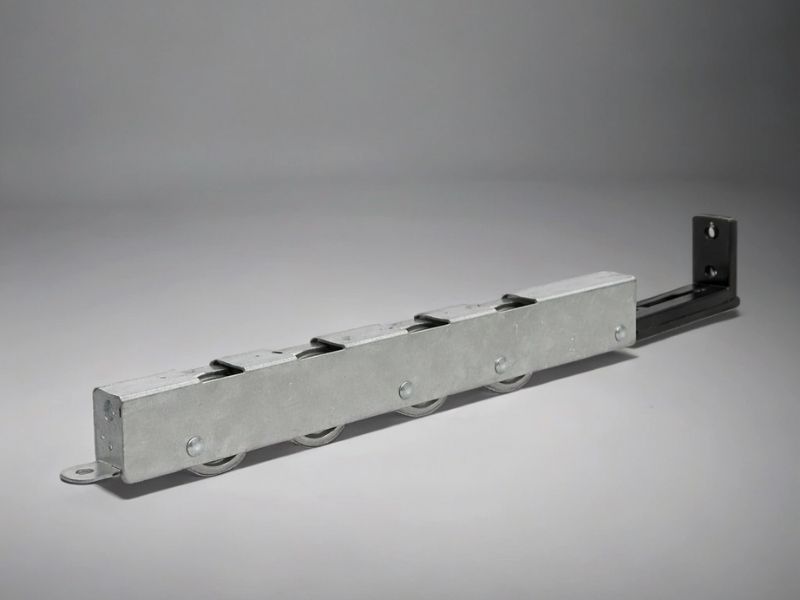
The Upper Guide Roller: Controlling Movement Trajectory
If the bottom rollers bear the load, the upper guide rollers keep the sash on the correct path. This is a component that does not bear the primary load but directly influences the solid feel during operation. When the sash slides, lateral forces from user operation or wind can cause the sash to shake. The guide roller limits this phenomenon by keeping the sash sliding straight. In the Kerssenberg hardware system, the upper roller plays the role of controlling movement geometry. Consequently, the door sash does not wobble, even with large dimensions. The coordination between upper and lower rollers helps the door system achieve a balance between lightness and solidity.
Handles and Auxiliary Handles: The Touchpoint of Experience
The handle is the hardware in direct contact with the user every day. The tactile sensation of gripping and operating significantly influences the evaluation of door quality. The Kerssenberg handle for exterior Slim doors is designed to be minimalist and solid to the grip. The integrated pull-and-lock mechanism makes operation seamless and safer. Additionally, the Slim auxiliary handle is used for secondary sashes that do not require locking, maintaining aesthetic synchronization. The handle system is categorized by installation direction to ensure the locking mechanism operates accurately. In the Kerssenberg set, the handle group not only plays an operational role but also contributes to overall stability during use.
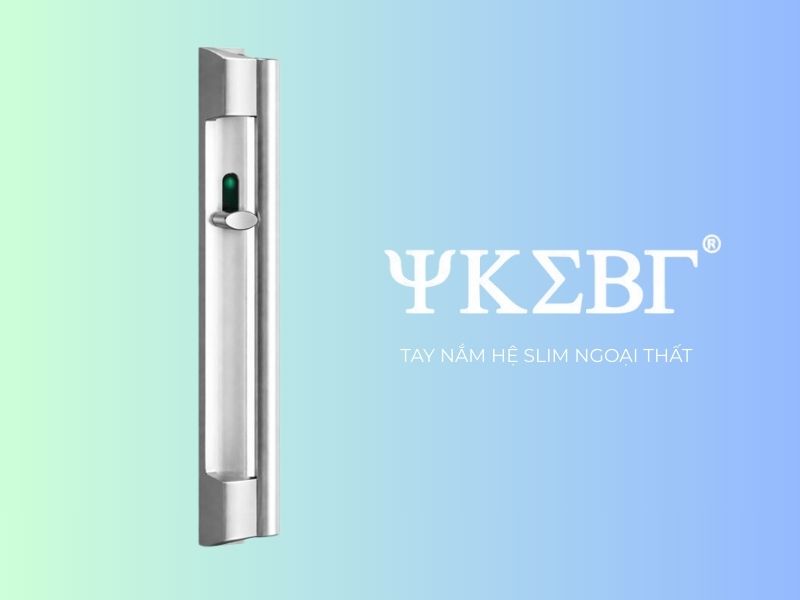
Locks and Latches: Holding the Sash in Position
When the door is in the closed state, locking details and latches play the role of keeping the sash stable. The edge lock head helps control the stopping point and the tightness of the sash. The Slim system striker keeps the sash from being displaced during use. These details do not directly create motion but influence the solidity of the door system. In the Kerssenberg hardware set, the lock and latch group is designed to work stably with the handle and rollers. When these components coordinate well, the sash maintains a precise position and reduces vibration during opening and closing.
Connecting Details and Precision Adjustment
Beyond the visible accessories, the Slim door system includes small details that perfect operation. Plastic adjustment bars support alignment and maintain stable movement. The Slim T-connector assumes the linking role within the door structure. Although they do not directly bear large loads, these details help reduce installation errors. When the door system is aligned precisely from the start, future usage becomes more stable. In the Kerssenberg set, the connecting detail group plays the role of perfecting precision for the entire operational system.
Synchronized Coordination in Reality
The strength of the Kerssenberg hardware set lies not in individual details but in the coordination among all parts. Load-bearing rollers, guide rollers, handles, locks, and connecting details all work together. When one component performs its role correctly, the others function more effectively. This synchronization helps exterior Slim doors operate lightly, solidly, and stably. This is a factor that is difficult to perceive immediately but becomes clearly evident after a period of use.
Long-Term Efficiency in Exterior Environments
Exterior Slim doors must function under significant environmental impacts. Humidity, wind, and high usage frequency all affect operation. The Kerssenberg hardware set is designed to maintain efficiency in this context. When the load is distributed rationally and movement is controlled, the door system reduces the need for maintenance. Users perceive long-term stability rather than just smoothness in the initial stage. This is the practical value the hardware system provides.
Conclusion on the Role of the hardware Set
The stable operation of exterior Slim doors is the result of a synchronously designed hardware system. The Kerssenberg hardware set includes load-bearing rollers, guide rollers, handles, locks, and connecting details, with each part holding a distinct role. When coordinated correctly, the entire door system operates lightly, solidly, and durably over time. This is the technical foundation that helps exterior Slim doors meet long-term usage requirements in modern projects.