
Kerssenberg hardware for slim sliding exterior doors includes bottom rollers, top guide rollers, motion transmission parts, locking mechanisms, and handles. Each component plays a specific role in load support, alignment, synchronization, and user interaction, ensuring stable and smooth operation in exterior conditions.
Understanding the Role of Hardware in Slim Sliding Exterior Doors
A slim sliding exterior door is more than a frame and glass. It is a mechanical system that relies on multiple components working together. Many people focus on aluminum profiles or glazing, but hardware often defines the real experience.
In exterior applications, the door must handle wind pressure, frequent use, and environmental exposure. This means every component must work consistently over time. A small deviation in one part can affect the whole system.
Hardware is not an add-on. It is the foundation that controls movement, stability, and safety. Without proper hardware, even a well-designed door will not perform as expected.
Systems using Kerssenberg components are often designed with this principle in mind. Each part is selected to support a specific function. The goal is not complexity, but balance across the system.
This article explains what components are included in a typical hardware set for slim sliding exterior doors. Instead of listing parts randomly, we will break them into functional groups. This helps you understand how the system works as a whole.
By the end, you will see that choosing hardware is not about individual pieces. It is about how those pieces interact under real conditions.
Overview of a Complete Hardware Configuration
A complete hardware set is not just a collection of separate items. It is a structured system where each group supports a specific role. When one part is missing or mismatched, performance is affected.
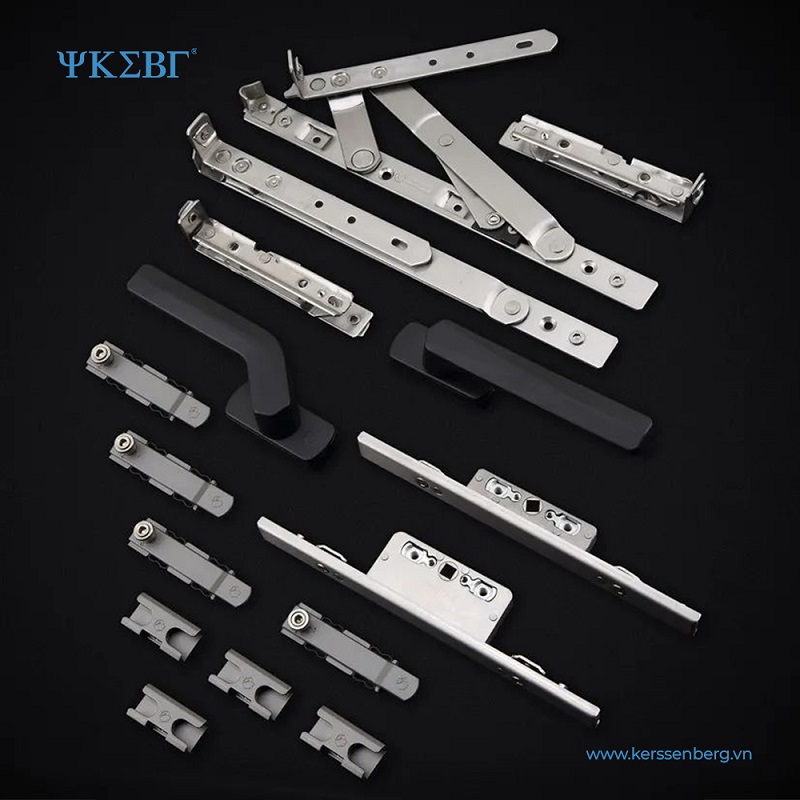
A typical configuration includes several functional groups. The first group handles load bearing. These components carry the weight of the door panels and enable movement. The second group controls guidance. These parts keep the door aligned during operation.
Another group manages motion transmission. This becomes important when multiple panels move together. There is also a locking group that ensures the door remains stable when closed. Finally, there are user interface components such as handles.
Each group contributes to a different aspect of performance. Load components affect durability. Guidance affects stability. Transmission affects synchronization. Locking affects safety and sealing. Handles affect usability.
In systems built with Kerssenberg, these groups are designed to work together. The goal is to create a predictable and stable movement over time.
It is important to understand that no single component can define the system. Performance depends on how all groups interact. This is why a complete configuration is always recommended.
Load Bearing Components: The Foundation of Movement
The load bearing system is the core of any sliding door. It determines how smoothly the door moves and how long it lasts. In slim exterior doors, this role is handled by bottom rollers.
Two main types are commonly used. The first is the dual wheel roller. It is suitable for lighter panels or moderate usage. Its structure is simple and effective in standard conditions.
The second type is the four wheel stainless steel roller. This option is used for larger or heavier panels. The additional wheels help distribute weight more evenly. Stainless steel improves resistance to corrosion, which is important for exterior use.
The performance of these rollers affects several factors. Smoothness during operation depends on how well the load is supported. Noise levels are also influenced by roller quality. Over time, poor load distribution can lead to sagging.
In systems using Kerssenberg, roller design focuses on stability rather than speed alone. The goal is controlled movement under different loads.
It is also important to match the roller type to the panel size. Using an under-specified roller can lead to early wear. Using an appropriate configuration helps maintain alignment and reduces maintenance.
In practice, load bearing components act as the base of the entire system. If this foundation is not stable, other parts cannot compensate.
Guidance Components: Keeping the Door on Track
Guidance components are responsible for controlling the path of movement. While rollers carry the weight, guidance keeps the door aligned.
The main element in this group is the top guide roller. It works with the upper track to maintain vertical alignment. Without proper guidance, the door can sway or deviate from its path.
This becomes more critical in tall panels or large glass surfaces. Even small movements can create visible instability. Over time, this can affect both performance and perception.
The guide system also helps reduce lateral vibration. When the door moves, forces are not always perfectly centered. Guidance components absorb these variations and keep the motion consistent.
In systems designed with Kerssenberg, guidance is treated as an essential part of stability. It is not optional, especially for exterior doors.
Incorrect installation of guide components can lead to uneven wear. It can also increase friction in certain positions. This is why alignment during installation is important.
In summary, guidance components do not carry the load, but they control how that load moves. They ensure that the door operates along a defined path, which improves both durability and user experience.
Motion Transmission Components: Synchronizing Multiple Panels
When a sliding door includes multiple panels, coordination becomes important. Without a transmission system, each panel must be moved individually. This reduces convenience and creates uneven movement.
Motion transmission components solve this problem. The main element is the connecting bar. It links panels so that movement can be shared. When one panel moves, others follow in sequence.
This creates a synchronized operation. It reduces effort for the user and improves consistency. In larger openings, this becomes a key advantage.
Additional elements such as connectors and positioning parts support this system. They ensure that force is transferred correctly between panels. They also help maintain spacing and alignment.
In configurations using Kerssenberg, transmission components are designed to be adjustable. This allows fine tuning during installation. Proper adjustment ensures smooth coordination between panels.
If transmission is not configured correctly, panels may move at different speeds. This can cause stress on certain components. Over time, this affects durability.
A well-designed transmission system improves both usability and performance. It transforms multiple panels into a single coordinated system.
Locking and Safety Components: Stability in the Closed Position
Locking components serve more than one purpose. They secure the door, but they also stabilize it when closed. In exterior doors, this is especially important.
The main element is the side lock mechanism. It engages when the door reaches the closed position. This prevents unintended movement and keeps the panel in place.
Locking also contributes to sealing performance. When the door is held firmly, gaps are minimized. This helps reduce air and water infiltration.
In systems using Kerssenberg, locking is designed to integrate with the overall structure. It is not an isolated feature. It works together with alignment and load distribution.
Proper locking improves resistance to external forces. Wind pressure can cause movement in large panels. A stable lock helps maintain position under these conditions.
It is also important to choose the correct locking configuration. Different door sizes and layouts require different solutions. A mismatch can reduce effectiveness.
In summary, locking components provide both security and stability. They ensure that the door remains in the intended position when not in motion.
Handles and User Interaction: The Human Interface
Handles are the main point of interaction between the user and the door. While they may seem simple, they influence how the system feels in use.
There are typically two types. The primary handle is used for regular operation. It provides grip and allows the user to apply force. The secondary handle supports operation from additional positions.
The design of the handle affects control. A well-designed handle distributes force evenly. This reduces strain during movement, especially for larger panels.
In systems that include Kerssenberg, handle placement is aligned with panel structure. This ensures that force is applied in a balanced way.
Handles also affect perception. A stable and comfortable grip contributes to a sense of quality. Even if the internal system is well designed, poor handling can reduce the experience.
It is important to match handle type with door size and layout. Larger panels may require more than one interaction point.
In practice, handles do not change the mechanics of the system. However, they define how users interact with those mechanics. This makes them an essential part of the overall design.
How All Components Work Together as One System
Each component group has a specific role. However, performance depends on how they work together. A sliding door system is only as strong as its weakest link.
Load bearing components support weight. Guidance components control alignment. Transmission components coordinate movement. Locking components stabilize position. Handles enable interaction.
When these groups are balanced, the system operates smoothly. Movement feels controlled and predictable. Wear is distributed evenly across components.
In systems built with Kerssenberg, this balance is a key objective. Components are not designed in isolation. They are part of a coordinated structure.
If one group is missing or poorly configured, issues appear. The door may become unstable, harder to operate, or less durable. These problems often develop over time.
A complete configuration ensures that each function is supported. It reduces the need for adjustments and improves long term reliability.
Understanding this interaction helps in selecting the right system. It also highlights why partial solutions often fail.
When a Full Hardware Configuration Is Necessary
Not every door requires the same configuration. However, certain conditions make a full system essential.
Large panels increase load and require stronger support. Multiple panels require synchronization. Exterior environments introduce additional stress factors such as wind and moisture.
In these cases, using a complete hardware set becomes important. It ensures that all functions are addressed. Partial configurations may work initially, but they often lead to issues later.
Systems using Kerssenberg components are often applied in these scenarios. The goal is to maintain consistent performance under varying conditions.
It is also important to consider usage frequency. High traffic areas require more durable solutions. Components must handle repeated cycles without degradation.
Choosing a full configuration is not about adding complexity. It is about ensuring that each function is properly supported. This reduces risk and improves long term performance.
Conclusion: Hardware as the Core of System Performance
Slim sliding exterior doors are mechanical systems. Their performance depends on how components interact. Hardware is not secondary. It defines how the system behaves.
From load bearing to guidance, each group plays a role. Transmission ensures coordination. Locking provides stability. Handles connect the system to the user.
Systems built with Kerssenberg components follow a structured approach. Each part supports a specific function. Together, they create a balanced system.
Understanding this structure helps in making better decisions. It reduces the chance of mismatched components. It also improves long term reliability.
In the end, choosing the right hardware is not about individual parts. It is about building a system that works as one.