
Slim panoramic sliding doors are often chosen for wide openings, large glass panels, and clean architectural lines. Their visual appeal comes from slim aluminum frames and broad glass surfaces. Yet the long term user experience depends on something less visible: the bottom rollers. In a sliding door system, these rollers carry the main load of each sash. They also affect how smoothly the door moves every day.
For a slim panoramic door, the sash can be tall, wide, and heavy. The Kögen exterior slim system can be designed up to about 3.8 m in height. Each sash can reach up to 2000 mm in width, based on technical information. With large glass and slim frames, the bottom roller selection must be calculated carefully. It should not be treated as a small accessory.
This is why Kerssenberg hardware is important in the complete door system. The bottom roller, upper guide roller, locking parts, handles, striker parts, and slim T connector all need to work together. When the roller load is correct, the door feels lighter. It also runs with better stability. When the load is wrong, the door may become heavy, noisy, or less durable over time.
This article explains the main types of load bearing bottom rollers used for slim panoramic sliding doors. It also shows when to choose plastic rollers, stainless steel rollers, 4 roller sets, or 8 roller sets. The focus is on practical selection, not only product appearance.
Why bottom rollers matter in a slim panoramic sliding door
The bottom roller is one of the most important parts in a slim panoramic door. It sits at the base of the sash and runs directly on the rail. While the upper guide keeps the sash aligned, the bottom roller carries most of the weight. This includes the aluminum frame, glass, accessories, and any extra load from the door structure.
A slim frame can make the door look light. However, the actual weight may still be high. A large sash with thick glass can put strong pressure on the roller. If the roller does not match the sash weight, several problems can appear. The door may slide heavily. The rail may wear faster. The sash may vibrate during movement. Noise can also increase after a period of use.
Kerssenberg hardware helps the system operate as a connected set. The bottom roller supports the load. The upper guide roller helps keep the sash in position. The locking parts help the door close correctly. These parts are especially important for exterior doors, where wind, rain, and frequent use can affect stability.
For slim panoramic doors with large openings, the roller should always be selected by sash load. It should not be selected only by the total door width. A 4 sash door, for example, still needs the load of each sash calculated separately. Each sash has its own roller set. This makes the roller specification more accurate and safer for real use.
A correct roller choice helps the door keep its smooth movement. It also protects the rail and reduces stress on the whole system. For high, wide, or heavy glass doors, this detail becomes even more critical.
Main factors that affect sash weight
The weight of each sash depends on several factors. The first factor is size. A taller and wider sash uses more aluminum and more glass. In the Kögen exterior slim system, the maximum height can be around 3.8 m. The maximum width can be 2000 mm per sash. These numbers show why the roller specification must be chosen with care.
Glass type is another key factor. Single glass is usually suitable for normal homes that need daylight and open views. It is lighter than insulated glass. Insulated glass, often called double glass or glass unit, can improve sound reduction and thermal performance. However, it also adds more weight to the sash. When 24 mm insulated glass is used, the roller load must be checked carefully.
Door configuration also changes the calculation. A 2 rail system can be used for 2 or 4 sashes. A 3 rail system can be used for 3 or 6 sashes. A 4 rail system can be used for 4 or 8 sashes. Each layout changes the sash width, stacking position, and opening method. A wider sash usually means higher load on the roller.
Installation position also matters. A door installed in a living room opening may have different requirements from a door installed on a wide facade. A villa, resort, showroom, or exterior area may need stronger roller options. In windy locations, the whole system may also need extra reinforcement. For tall and wide doors, a wind resistant stiffener can be considered to improve stability.
Kerssenberg hardware should be selected after these factors are reviewed. The right roller is not only about maximum load. It is also about smooth travel, rail protection, sash alignment, and long term durability.
Load bearing bottom roller types for slim panoramic doors
There are four main bottom roller choices for this slim panoramic system. Each type has a different load range and application. The correct choice depends on the sash weight, glass type, sash size, and project requirement.
| Bottom roller type | Roller count | Material | Maximum load per sash | Suitable use |
|---|---|---|---|---|
| Plastic bottom roller | 2 rollers | Technical plastic | 80 kg per sash | Small sash, single glass, light load |
| Plastic bottom roller | 4 rollers | Technical plastic | 160 kg per sash | Medium sash, balanced load |
| Stainless steel bottom roller | 4 rollers | Stainless steel | 350 kg per sash | Large sash, thicker glass, exterior use |
| Stainless steel bottom roller | 8 rollers | Stainless steel | 400 kg per sash | Very large sash, heavy insulated glass |
This table gives a practical direction. It should not replace a real technical calculation. In actual projects, the team still needs to check sash height, sash width, glass specification, rail layout, wind direction, and installation position.
Kerssenberg hardware is useful because the bottom roller range offers different load options. A small sash does not always need the highest load roller. A very large sash should not use a light duty roller. The correct choice should balance safety, smooth movement, durability, and cost.
The biggest mistake is choosing rollers by habit. Some projects use the same roller for every door. That can cause problems when the sash size changes. A 3.8 m high sash with heavy glass has different needs from a smaller door. A showroom facade has different needs from a small residential opening.
The bottom roller should be seen as a load bearing component. It is not only a moving wheel. It protects the performance of the whole sliding system.
Plastic 2 roller set for 80 kg per sash
The plastic 2 roller set is the lightest option in this roller range. It can support up to about 80 kg per sash. This type is suitable for small sliding sashes with a lower load. It can work well when the sash is not too high, not too wide, and uses single glass.
This option is often considered when the door has a simple layout. It may fit smaller openings where the sash weight stays within the safe limit. In this case, the roller does not need to carry excessive force. The door can still move smoothly when the rail and installation are correct.
However, this roller should not be used for heavy sashes. It is not suitable for very large glass panels. It is also not the right choice for insulated glass sashes with higher weight. If a 2 roller plastic set is overloaded, the door may become harder to slide. The rail may face more pressure. The rollers may also wear faster than expected.
Kerssenberg hardware should be selected according to real sash weight. The 80 kg figure is a useful boundary. It helps technicians decide whether this option is enough. When the sash weight is close to the limit, it is safer to review the next roller level. A 4 roller plastic set may distribute weight better.
This roller type should not be described as weak. It simply has a specific load range. When used correctly, it can serve suitable doors well. The problem only appears when the roller is applied beyond its intended range.
For slim panoramic doors, the key is matching the roller with the sash. A light sash can use a light duty roller. A larger sash needs a stronger roller.
Plastic 4 roller set for 160 kg per sash
The plastic 4 roller set can support up to about 160 kg per sash. It is a stronger choice than the 2 roller version. Because it uses more rollers, it can distribute the load across more contact points. This helps the sash move with better balance under medium load conditions.
This type is suitable for medium sized sashes. It can be used when the sash weight is higher than the 80 kg range but still does not require stainless steel rollers. It can also suit residential projects where the door needs smooth operation and moderate durability. The exact suitability still depends on the glass, sash width, and installation condition.
A 4 roller design offers better load distribution. This matters because slim panoramic doors often have wide glass areas. Even when the frame looks thin, the glass can add noticeable weight. With four rollers, the pressure on each contact point is reduced compared with a 2 roller set.
Kerssenberg hardware in this category can be considered for balanced configurations. It is not the heaviest option. It is also not only for very small doors. It sits in the middle range for practical use. For many standard residential openings, this can be a reasonable technical choice.
Still, it has limits. If the door uses 24 mm insulated glass, the sash weight can increase quickly. If the sash is very high or wide, 160 kg may not be enough. In those cases, stainless steel rollers should be reviewed. A roller should not be selected only to save cost. It should protect the long term movement of the door.
This option is best when the sash load is clearly within the 160 kg range. It gives more support than a 2 roller set while keeping the configuration simple.
Stainless steel 4 roller set for 350 kg per sash
The stainless steel 4 roller set can support up to about 350 kg per sash. This makes it suitable for larger slim panoramic doors. It is often considered for wide sashes, thicker glass, and exterior applications. The higher load capacity gives more safety margin for demanding projects.
Stainless steel rollers are useful when the sash carries a serious load. A large glass panel can be heavy, especially when the door height approaches the upper technical range. For example, a sash close to 3.8 m in height needs careful load planning. If the width also increases, the roller must be strong enough to keep movement stable.
This roller option is relevant for living room openings, villa facades, large balconies, and wide view areas. These spaces often need broad glass panels and smooth daily movement. The door should not feel heavy after a short period. It should also avoid excessive noise and rail wear.
Kerssenberg hardware works best when this roller is paired with the proper upper guide and locking parts. The bottom roller carries the main load. The upper guide keeps the sash aligned during travel. When both parts work together, the sash can slide with better control. This helps reduce vibration and misalignment.
This option is also helpful when the project has higher expectations for long term performance. A door may open and close many times each day. A stronger roller set can better handle repeated use. It also gives better confidence for larger glass designs.
The 350 kg per sash rating does not mean every door needs this type. It should be chosen when the sash weight and project condition justify it. For small sashes, a lighter option may already be enough.
Stainless steel 8 roller set for 400 kg per sash
The stainless steel 8 roller set is the highest load option in this group. It can support up to about 400 kg per sash. This type is suitable for very large sashes, heavy insulated glass, and demanding exterior openings. It is designed for cases where load distribution becomes very important.
With 8 rollers, the sash weight is spread across more rolling points. This can reduce concentrated pressure on the rail. It can also support smoother movement under heavier loads. For large slim panoramic doors, this difference can be important. A heavy sash needs both strength and stable rolling contact.
This roller type can be considered for villas, resorts, showrooms, and wide facade openings. These projects often require a large view and maximum opening space. A 4 rail system with 4 or 8 sashes may also need careful roller selection. If each sash is large and uses insulated glass, the 400 kg option may be the safer technical direction.
Kerssenberg hardware should still be selected through calculation. A 400 kg roller is not always required. If the sash is small or light, the project may not need this level. Over specifying every part can increase cost without clear benefit. The correct approach is to match the roller to the sash load and usage demand.
This roller is most valuable when the door is close to its heavy duty range. It supports large dimensions, thicker glass, and frequent operation. It is also useful when the owner expects a stable and premium sliding feel.
For high end projects, the bottom roller is not just a hidden part. It becomes a key reason the door feels smooth and reliable over time.
Key details from the Kerssenberg bottom roller drawing
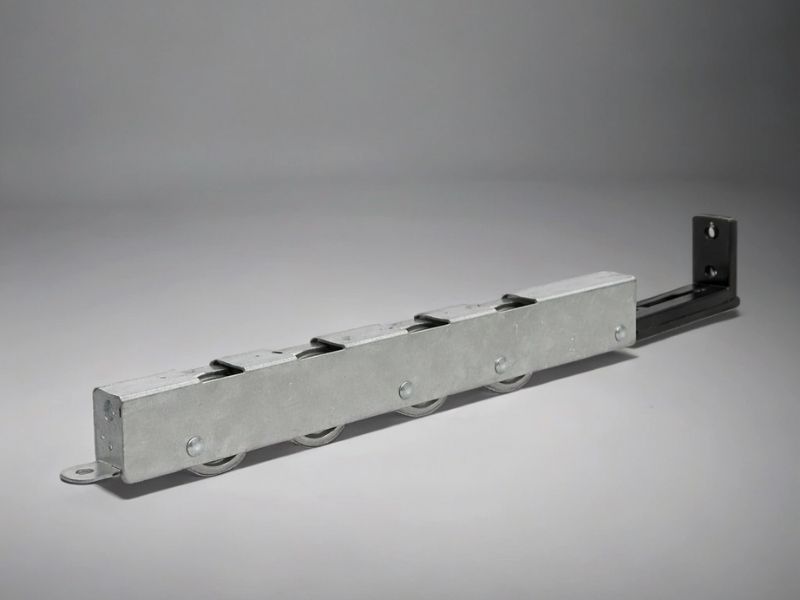
The supplied drawing shows a bottom roller unit used for slim panoramic sliding doors. The part has a long body with multiple rollers arranged along the main housing. The drawing also shows a connection detail at one end. The visible length of the main body is about 235 mm. This dimension is useful when reviewing the space required inside the sash profile.
The drawing also shows the slim and elongated form of the roller unit. This shape helps the roller set sit neatly within the door structure. A longer roller body can also support better alignment along the rail. The visible multi roller layout suggests a focus on load distribution and stable movement.
It is important not to overstate information from the drawing. The image does not confirm every material detail or every product code. The load rating should come from technical data, not from visual inspection alone. Based on the provided product information, the system includes bottom rollers with 80 kg, 160 kg, 350 kg, and 400 kg per sash options.
Kerssenberg hardware also includes related components for the same door system. These include the upper guide roller, edge lock component, striker part, left handle, right handle, slim sliding T component, and bottom roller by load level. These parts are not separate decorations. They work as a functional group.
In a tall exterior door, the bottom roller and upper guide must work together. The bottom roller supports the sash. The upper guide controls direction and reduces unwanted movement. When the set is correctly matched, the sash can remain more stable during operation.
For technical articles, the drawing can be used to explain construction logic. It should not be used to invent claims beyond the supplied data.
Choosing rollers by sash load, not by total door size
A common mistake is choosing bottom rollers based on the total door size. This is not accurate. A sliding door is made from separate sashes. Each sash has its own weight and its own roller set. Therefore, the roller must be selected by the load of each sash.
For example, a 4 sash door may look large as a complete set. Yet each sash may still be within a medium load range. Another project may have only 2 sashes, but each sash can be very wide and heavy. In that case, the roller requirement may be much higher. The number of sashes alone does not decide the roller.
Kerssenberg hardware should be specified after checking each sash. The technician should know the sash height, sash width, glass type, and expected weight. The rail layout should also be reviewed. A 2 rail, 3 rail, or 4 rail door creates different sash positions and stacking methods.
Glass selection is especially important. Single glass can keep the sash lighter. Insulated glass can improve comfort but adds weight. A 24 mm glass unit may require a higher load roller, especially when combined with a large sash. This is why roller selection must happen before production, not after installation.
The installation location also matters. Exterior doors face wind pressure, rain, and temperature changes. A facade door may need more stability than an interior partition. If the project is in a windy location, extra reinforcement can be considered for tall and wide openings.
Correct roller selection protects the user experience. It helps the door move lightly and consistently. It also protects the rail, frame, and guide system from avoidable stress.
Relationship between bottom rollers, rails, and smooth movement
A bottom roller cannot work well without the right rail. The rail is the running path for the roller. If the rail is not suitable, even a strong roller may not deliver smooth movement. If the roller is under specified, a good rail can still face pressure and wear.
The movement of a slim panoramic door depends on several parts working together. The bottom roller carries the weight. The rail supports the running surface. The upper guide keeps the sash aligned. The lock and striker help the door close securely. When one part is wrong, the whole system can feel less stable.
Kerssenberg hardware is designed as a set for this type of door. This matters because exterior slim doors can be tall and wide. A sash up to about 3.8 m high needs controlled movement. Without proper guidance, the sash can shake or feel unstable. With a suitable roller and guide, movement becomes more confident.
Wrong roller selection can create several issues. The door may become heavy to pull. The roller may create more noise on the rail. The rail may wear faster due to concentrated load. The sash may also shift slightly during movement. Over time, this can affect closing performance.
A well matched roller and rail system supports quiet and stable operation. It also helps maintain the slim design. The user can enjoy the open view without feeling that the door is fragile. This is the purpose of correct technical detailing.
For large exterior openings, the roller should never be treated as a minor cost item. It is a main part of door performance.
How to choose rollers for 2 rail, 3 rail, and 4 rail systems
A 2 rail system can be used for 2 sashes or 4 sashes. It is suitable for medium openings and simple operation. If each sash is small and uses single glass, the 80 kg or 160 kg roller option may be enough. If the sash is larger, thicker, or used outside, the stainless steel option should be checked.
A 3 rail system can be used for 3 sashes or 6 sashes. This layout can open a wider passage than many 2 rail configurations. It is often chosen when the owner wants a larger opening without using too few oversized sashes. However, the load of each sash still needs exact review. A wide sash with heavy glass may need the 350 kg stainless steel roller.
A 4 rail system can be used for 4 sashes or 8 sashes. This layout suits wide facades, showrooms, villas, and spaces that need maximum opening. Because these doors often cover large areas, the roller selection becomes more sensitive. If the sashes are large or use insulated glass, the 400 kg stainless steel 8 roller set can be considered.
Kerssenberg hardware should be chosen according to the actual layout. The number of rails affects how the sashes stack. It also affects walking space, cleaning access, and service access. These points should be planned before fabrication.
The best configuration is not always the one with the most rails. It depends on the opening width, desired clear passage, sash size, and project use. A good design should balance view, movement, stability, and maintenance.
The roller decision should come after the layout is clear. This helps avoid both under specification and unnecessary over specification.
When should a project upgrade from plastic rollers to stainless steel rollers?
A project should upgrade from plastic rollers when the sash becomes larger, heavier, or more demanding. The first sign is sash size. If the door is tall or wide, the load can exceed the comfort range of plastic rollers. This is especially true when the sash approaches the upper technical size range.
Glass type is another reason. Insulated glass is heavier than single glass. It can improve comfort, sound reduction, and thermal performance. Yet it also increases the weight carried by the roller. When 24 mm insulated glass is used, stainless steel rollers should be reviewed carefully.
Exterior use is also important. Doors on facades, balconies, garden openings, and wide living rooms may face more wind and daily use. These positions need better stability. A stainless steel roller can give stronger load capacity for such cases.
Kerssenberg hardware offers stainless steel roller options for higher load needs. The 4 roller stainless steel type supports up to 350 kg per sash. The 8 roller stainless steel type supports up to 400 kg per sash. These figures help define the correct technical range.
Another reason to upgrade is usage frequency. A door that opens many times each day needs consistent movement. If the project expects frequent operation, the roller should have enough capacity. A roller working too close to its limit may not be ideal for long term performance.
The upgrade should be based on calculation, not emotion. It is not necessary for every small door. It becomes valuable when the sash load, glass type, installation position, and usage demand require stronger support.
Common mistakes when selecting bottom rollers
The first mistake is choosing only by price. A cheaper roller may look attractive during quotation. However, if it cannot carry the sash correctly, the cost can appear later. The door may become heavy. The rail may wear faster. Service work may be needed sooner.
The second mistake is ignoring glass weight. Many people focus on door width and forget the glass specification. Single glass and insulated glass are not the same. A 24 mm glass unit can change the load level of the sash. This can change the roller choice completely.
The third mistake is looking only at the opening width. A wide opening does not tell the full story. The designer must know the number of sashes, rail layout, sash width, sash height, and glass type. Two doors with the same opening width can need different roller systems.
The fourth mistake is not considering the installation position. An exterior slim panoramic door may face wind and rain. A large facade door may need stronger stability than a sheltered interior door. For very tall or wide doors, an additional wind resistant stiffener may also be considered.
The fifth mistake is not using a synchronized accessory set. The bottom roller alone cannot solve every issue. The upper guide, locking points, handles, striker parts, and slim T component must support the same system logic.
Kerssenberg hardware should be treated as a complete working group. When the components match, the sash can move with better control. When parts are mixed without calculation, the door may not deliver the expected result.
A careful selection process saves time during installation. It also gives the user a better daily experience.
Conclusion: the right roller protects the whole slim panoramic system
A slim panoramic sliding door is valued for its clean frame, large glass area, and open view. However, the smooth feeling of the door depends strongly on its bottom rollers. These small hidden parts carry the sash weight every day. They also affect noise, stability, rail wear, and long term durability.
There are four main roller load levels to consider. The plastic 2 roller set supports about 80 kg per sash. The plastic 4 roller set supports about 160 kg per sash. The stainless steel 4 roller set supports about 350 kg per sash. The stainless steel 8 roller set supports up to about 400 kg per sash.
Kerssenberg hardware gives different roller choices for different sash loads. This makes it possible to match the door to real project needs. A small sash can use a lighter roller. A large exterior sash with heavy glass may need stainless steel rollers. A very large sash with insulated glass may require the 400 kg option.
Before choosing the roller, the project team should confirm the opening size, sash size, glass type, rail layout, and installation position. Wind direction and usage frequency should also be reviewed. If the door is tall, wide, or exposed to stronger wind, additional reinforcement may be considered.
The best roller is not always the biggest one. It is the one that matches the actual sash load. When the bottom roller, rail, upper guide, and locking parts work together, the door can slide smoothly and stay stable for years. This is the real value behind a well designed slim panoramic sliding system.